Senegal Secondary School
Project Status: Competition
Project Year: 2026
Use: School
Area: 380 m2
Location: Senegal
Team: MCxA + Pablo Lazo
Context
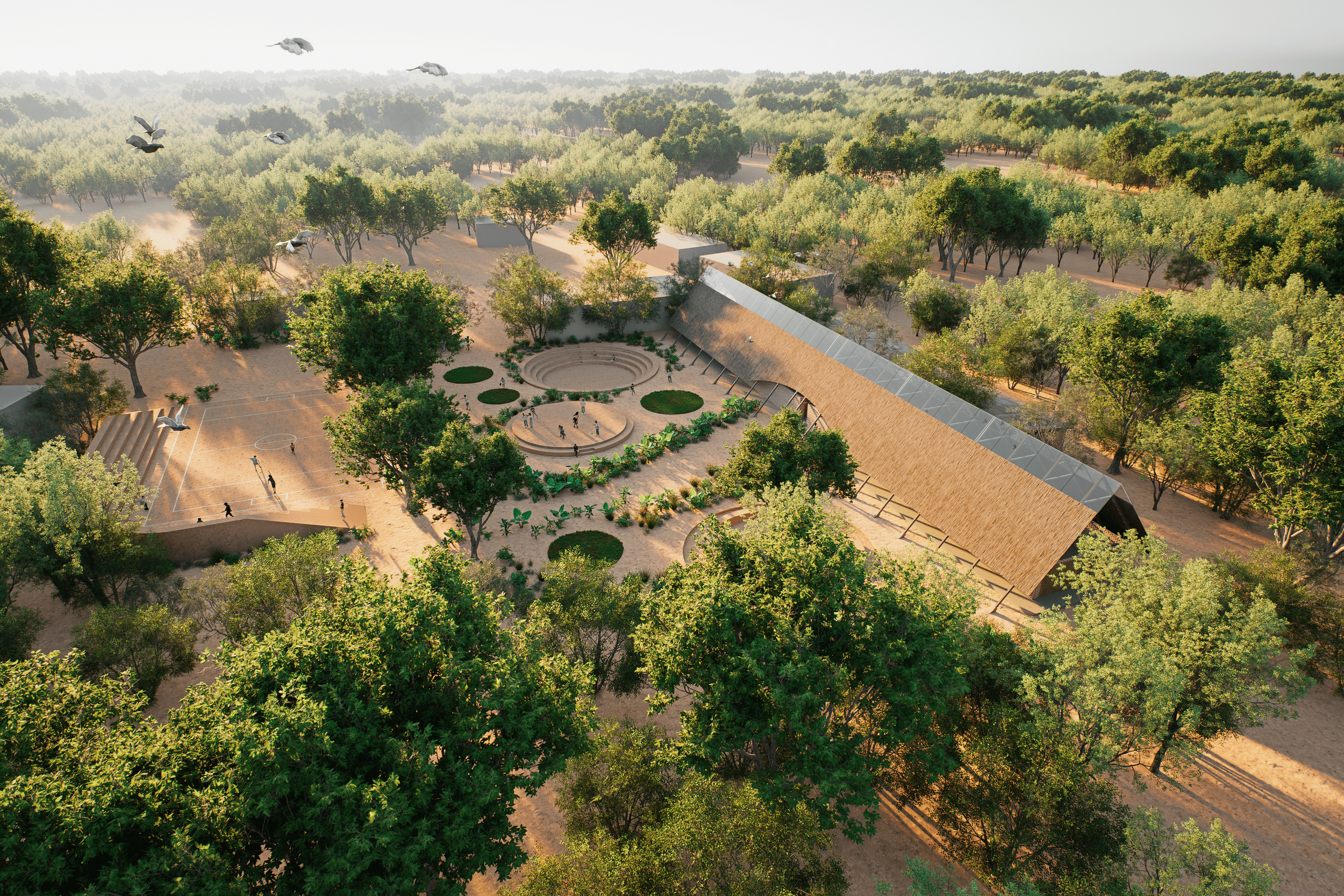
The project is located in rural Senegal, in the community of Djilakh, where educational infrastructure must respond to climatic extremes, limited economic resources, and strong social structures. The region’s hot tropical climate demands passive cooling strategies and shaded outdoor spaces, while construction budgets and material availability require simple, durable, and locally sourced solutions. In this setting, schools are not only places of learning but essential civic anchors, often serving as gathering spaces and shared community infrastructure.
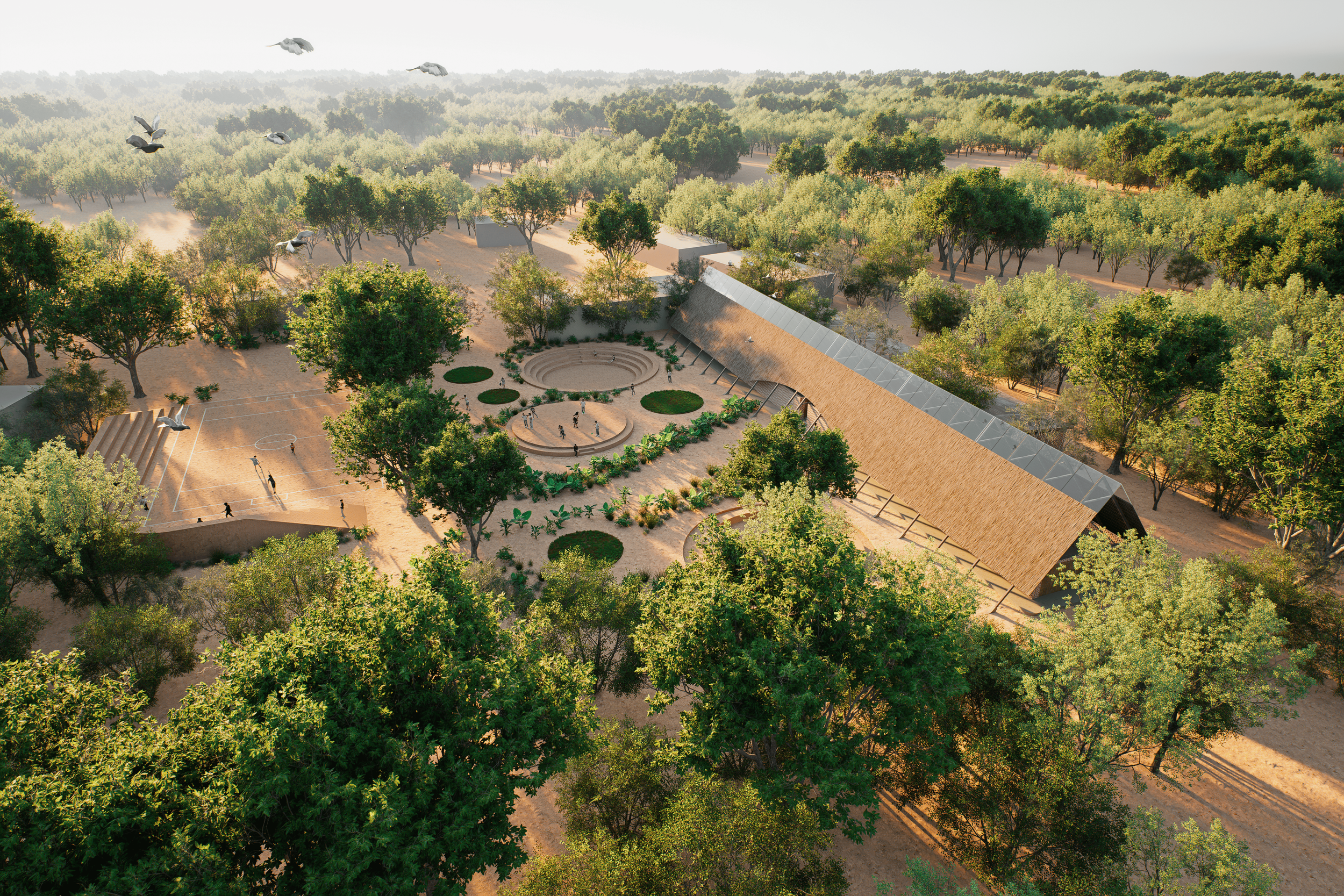
Surrounded by agricultural land defined by irrigation fields and circular cultivation patterns, the site reflects a landscape shaped by collective labor and ecological adaptation. Existing mature trees provide natural shade and define the character of the place, reinforcing the importance of integrating architecture with its environment. The proposal responds to this rural and communal context by envisioning the school as both a high-quality educational facility and a civic landmark—one that supports future growth while fostering identity, belonging, and shared ownership.
Design Principles
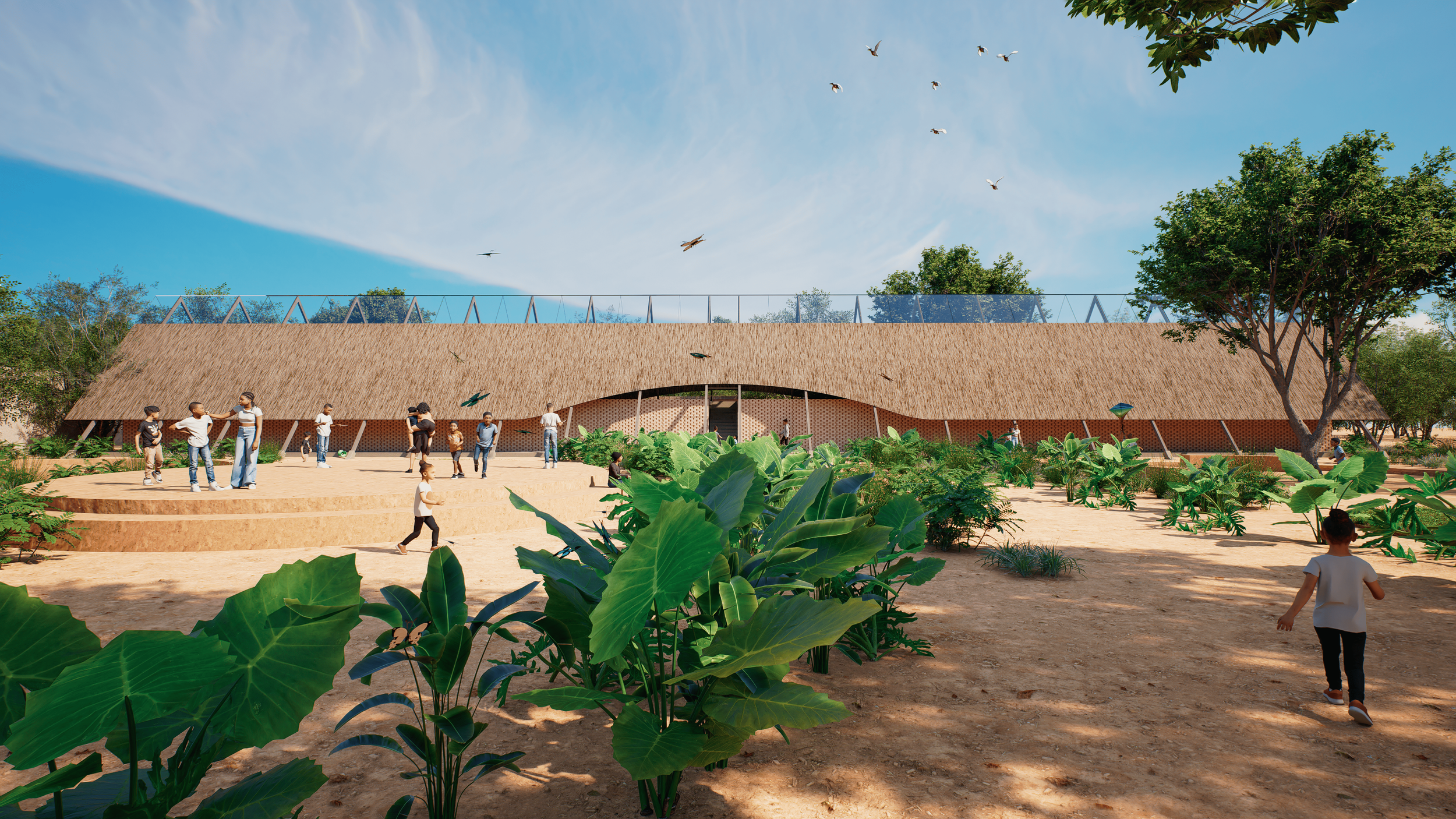
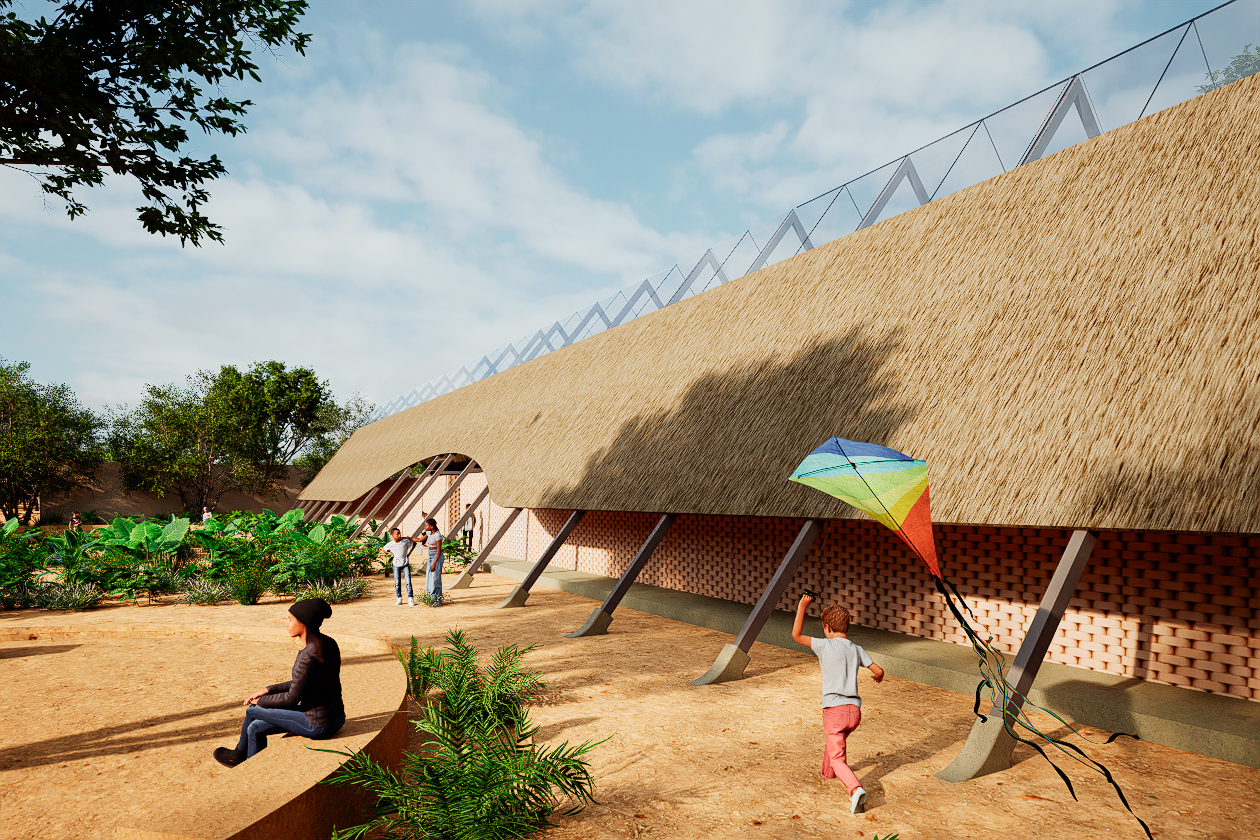
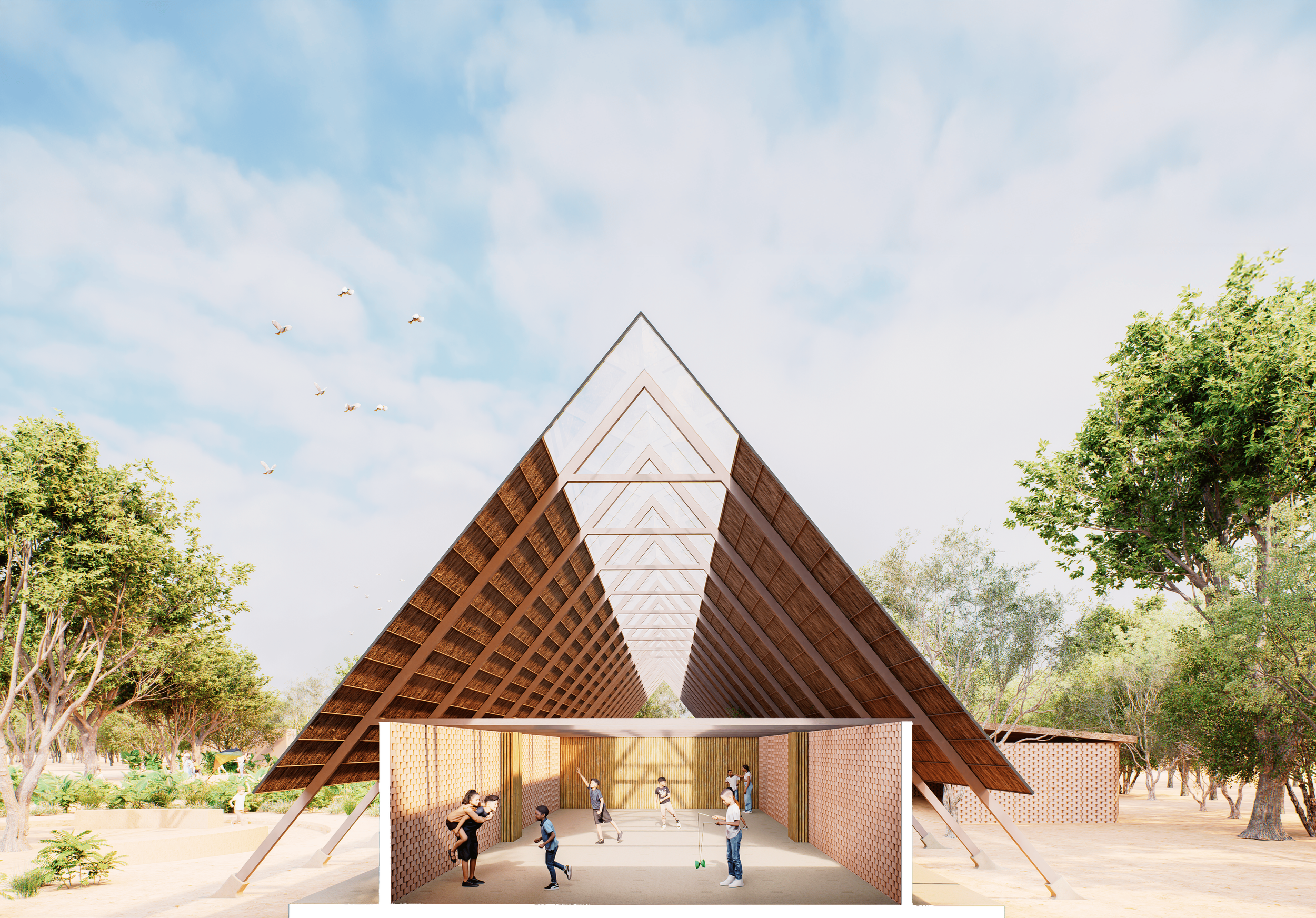
The triangular double-height structure creates an internal air gap that reduces heat gain and promotes natural ventilation. Shaded circulation corridors and the integration of mature trees enhance thermal comfort without mechanical systems.
All programmatic spaces are organized under a single roof, establishing spatial clarity and structural efficiency. The main structural framework anticipates future vertical expansion, allowing phased development without disrupting the existing building.
The construction system relies on three primary materials: metal, mud brick, and bamboo. Earth-based precast bricks anchor the classrooms, while bamboo-tensioned partitions allow flexibility and ease of replication in other rural contexts.
Access through an edible garden transforms arrival into an educational and social experience. The central garden fosters interaction and ecological awareness, reinforcing the school as a shared civic resource.
Circular planting plots reference local irrigation geometries, embedding the project within its agricultural surroundings. Architecture and landscape operate as a unified system, strengthening belonging and collective stewardship.